A Trusted Learning and Development Advisor
Learning how to resolve conflict is a valuable skill that will benefit you at work and in life. Our de-escalating conflict course teaches you how to handle tense situations with co-workers, managers, and customers. By learning these techniques, you can improve your interactions and foster a collaborative environment.
This De-Escalating Conflict Techniques course equips participants with practical, evidence-based strategies to safely manage challenging and aggressive behaviours. The approach is comparable to frameworks used in CPI and MAPA training, focusing on early intervention, emotional regulation, and safe de-escalation in workplace and public-facing environments.
Our conflict de-escalation training teaches practical strategies for dealing with disputes professionally, such as analysing body language and developing listening skills to address concerns. You will also learn to avoid blame by adopting a solution-oriented approach.
This course can be delivered in-person at your organisation or venue, or delivered virtually. We also offer micro-learning courses and training in areas, such as communicating under pressure, critical conversations, and emotional intelligence.
Effective conflict de-escalation is not just about resolving disputes; it’s also about building stronger relationships. Our de-escalating conflict program is designed to develop your organisation’s skills in the following areas:
Start mastering the skills needed to manage conflicts successfully-contact Preferred Training Networks today. Whether in major cities or regional areas, we offer in-person and online training programs across Australia to ensure accessibility for everyone. Learn more about our courses and how they can benefit your organisation.
What is the duration of the de-escalating conflict course?
This course can be adapted to suit your preferred timeframes and is available as a one-day or truncated half-day course.
Who should attend this deescalating training course?
We recommend this course for frontline staff and managers who can find themselves in intense situations.
Is this course suitable for those wanting to enhance their leadership skills?
Learning how to de-escalate conflict is an essential skill for successful leaders, as it facilitates communication and ensures productivity. Our course is suitable for those wanting to enhance their leadership skills.
What methods are used in the training? Is it an Australian course
Our de-escalating conflict workshop includes strategies such as building rapport, analysing body language, utilising positional bargaining, and more. We encourage you to contact our team for more information. Yes it’s an Australian training course.
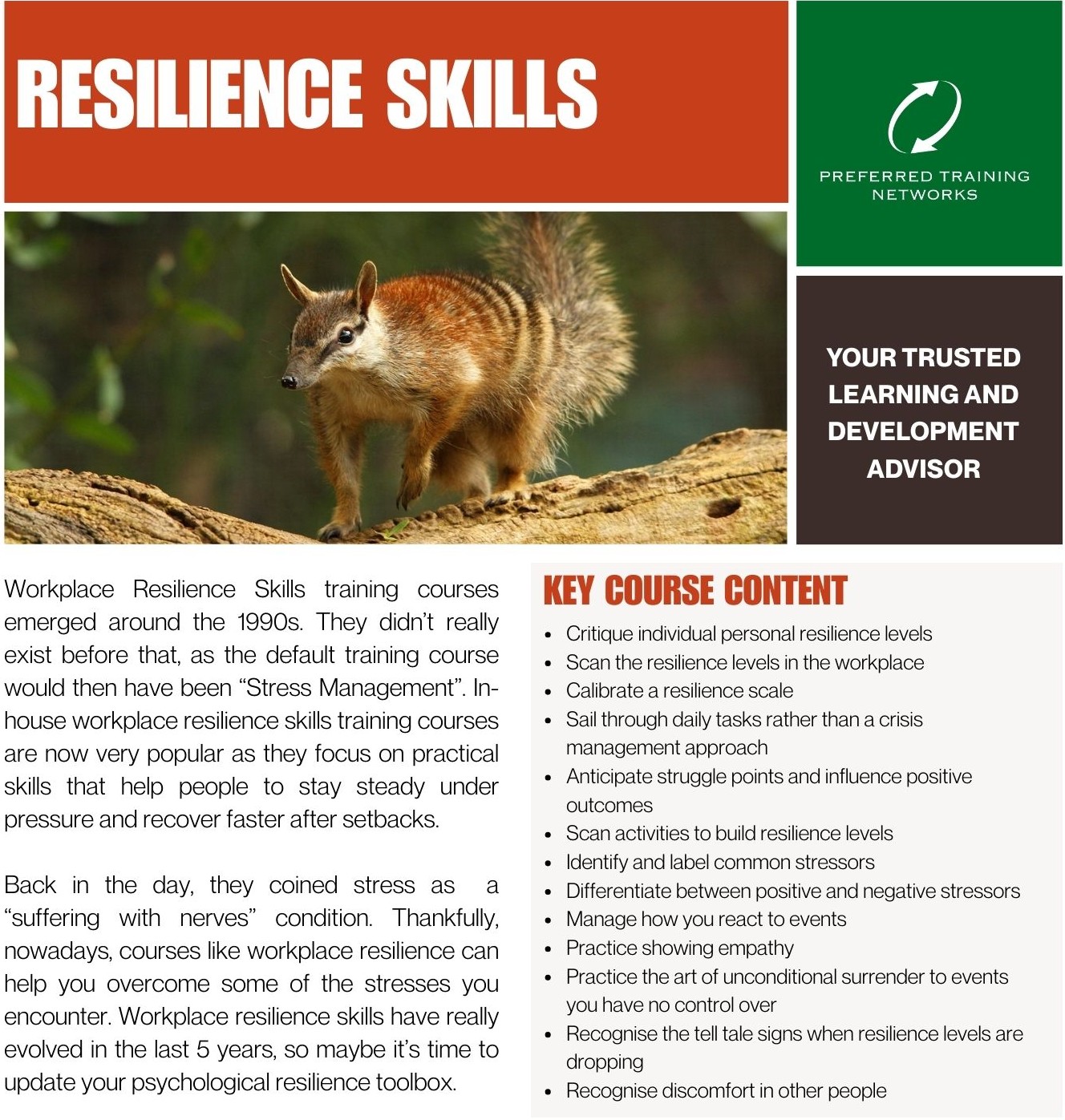
Being resilient means having a positive mindset and approach to these challenges. Resilience isn’t just a reactive skill that kicks in when you face obstacles; it requires practice. Our Resilience Skills Training course equips professionals across Australia with the tools to stay composed, adaptable, and productive under pressure
Whether at work or in your personal life, our resilience training courses help you develop fortitude. Build the skills to confidently handle difficult situations, including managing abuse and threats, while learning to organise your time effectively.
By the end of this course, you’ll learn to maintain a positive mindset, even in tough situations, by applying emotional intelligence, managing stress effectively, and supporting workplace mental health—helping you overcome obstacles with greater ease.
Q: What is resilience skills training?
A: It’s a workplace training program that helps employees manage stress, adapt to change, and stay productive in high-pressure environments.
Q: Where is this training delivered?
A: We offer resilience training Australia-wide, including Sydney, Melbourne, Brisbane, Perth, and online for remote teams.
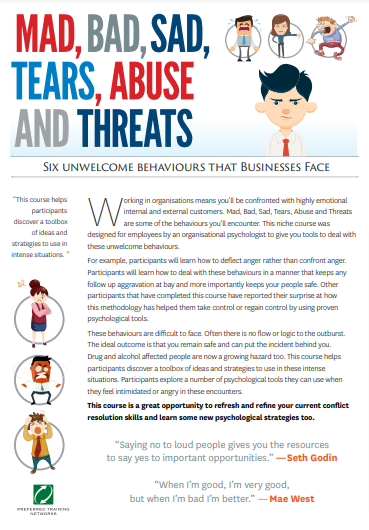
Participants will learn how to deflect anger rather than confront anger. Participants will learn how to deal with these behaviours in a manner that keeps any follow-up aggravation at bay and more importantly keeps your people safe. Other participants that have completed this course have reported their surprise at how this methodology has helped them take control or regain control by using proven psychological tools.
These behaviours are difficult to face. Often there is no flow or logic to the outburst. The ideal outcome is that you remain safe and can put the incident behind you. Drug and alcohol affected people are now a growing hazard too.
This course helps participants discover a toolbox of ideas and strategies to use in these intense situations. Participants explore a number of psychological tools they can use when they feel intimidated or angry in these encounters.
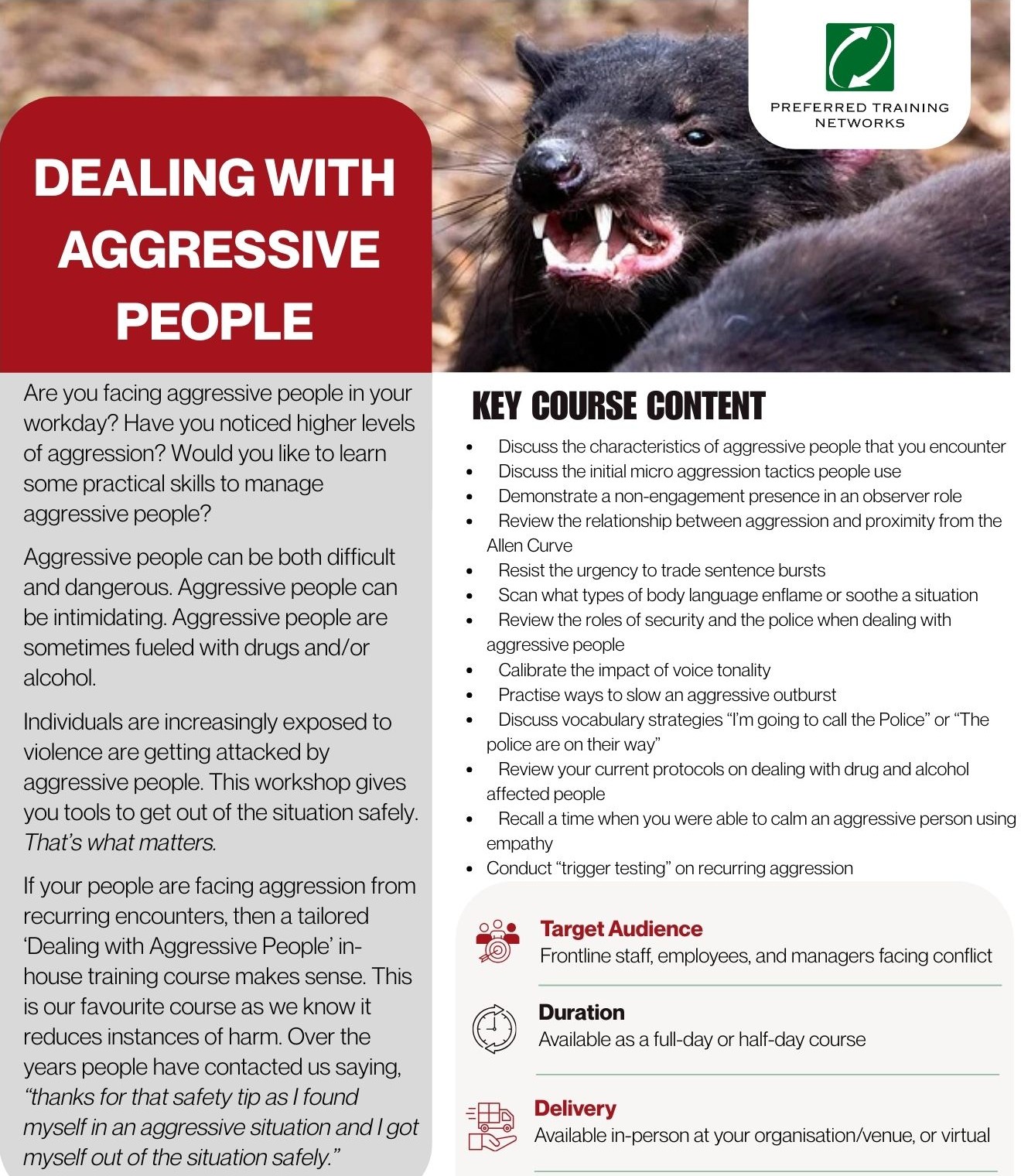
Our skilled experts discuss the characteristics of aggressive people and the initial micro-aggression tactics these people tend to use. Maybe they are badgering you? They want “aggro” and if that happens, you’re likely to lose. You don’t want aggression.
Aggressive people don’t have a pattern of aggression. Sometimes they are opportunistic and will wait till they have worn you down. You’re being badgered and baited. It’s not easy knowing what to do.
| Module | Topics | Key Learning Outcomes |
|---|---|---|
| Module 1: Personal Safety and Risk Awareness | Safety Risk Assessment |
|
| Fundamentals of Staying Safe |
|
|
| Recognising Danger Signs and Behavioural Triggers |
|
|
| Module 2: Understanding Aggressive Behaviours | Body Language and Non-Verbal Cues |
|
| Behavioural Triggers and Aggression in Different Settings |
|
|
| Profiling and Understanding Challenging Behaviours |
|
|
| Module 3: Communication and De-escalation Techniques | Managing Anger and Deflecting Aggression |
|
| De-escalation Strategies for Aggressive Situations |
|
|
| Module 4: Assertive Communication and Resolving Conflict | Communicating with Clarity and Confidence |
|
| Handling Aggressive Interactions Over the Phone |
|