A Trusted Learning and Development Advisor
Unfortunately, many people don’t know how to build an “idea generating” organisational culture. If you only do one training program with your team this year, then the “Idea Generating” training program should be at the top of your list.
For maximum effectiveness, this program is best conducted as an in-house program.
If you would like more information on this training program, please contact: Deborah Dear on 1300 323 752 or email: [email protected] or contact us online today.
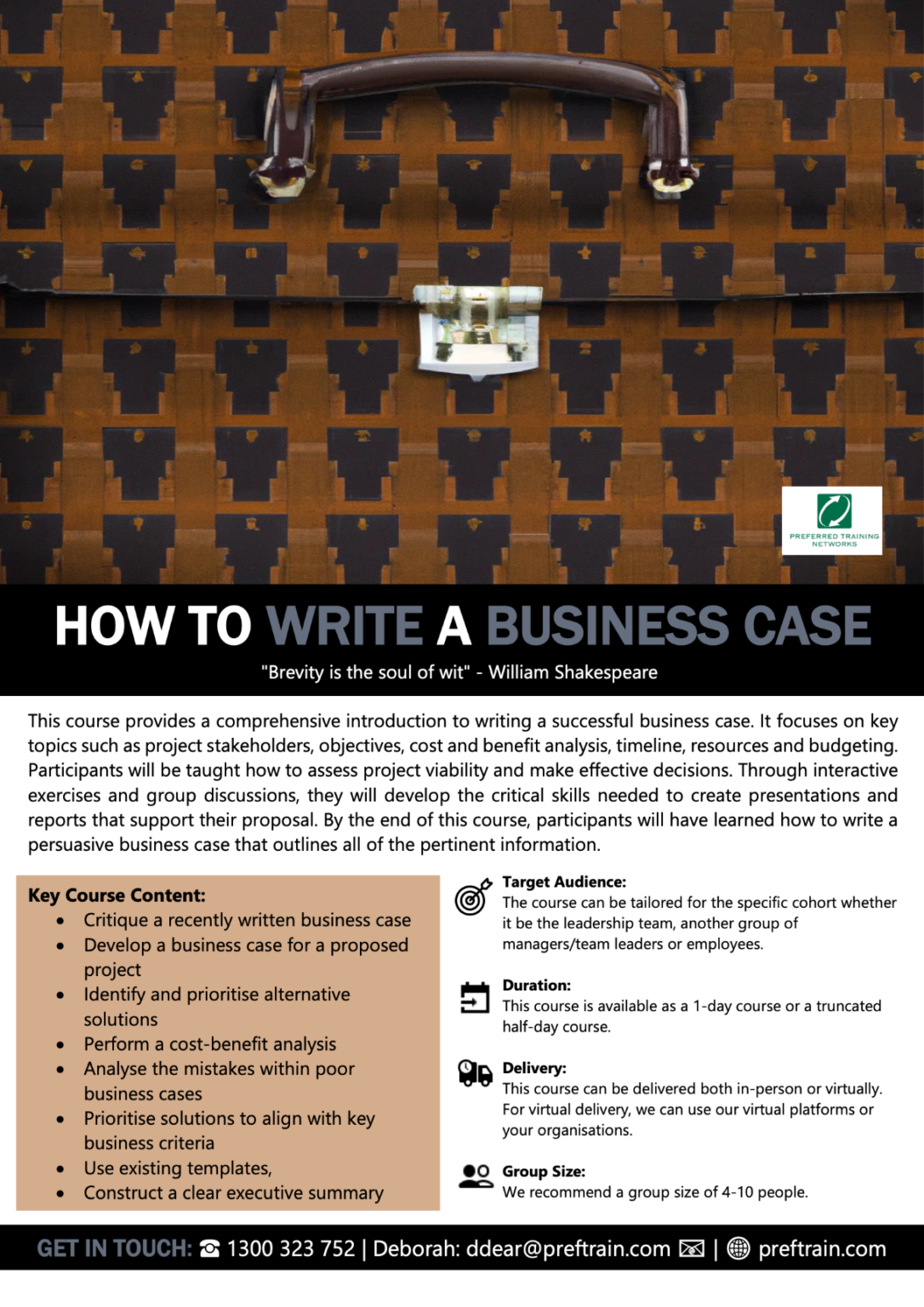
Your business cases should also indicate the risks and the alternative costs, including the cost of doing nothing. This course is ideal for people who would like to improve the quality of their written business cases. Participants will learn the eight key components of writing an effective business case.
For maximum effectiveness, this program is best conducted as an in-house program.
Ideal group size: 7–12 participants
Venue: For your convenience, you can choose to conduct this program at your business Alternatively, we can provide a training venue at a small additional cost
Duration: This program can be conducted as a one day or half day program
Cost: Price on request
If you would like more information on this training program, please contact: Preferred Training Networks on 1300 323 752 Email: Deborah at [email protected]
Be vigilant with social media too. Some employees are probably addicted and will spend all day on social media if they can. Check performance – For example, somebody might tell you they’ve been flat out on the project since last week. Ask them to demonstrate to you the actual tasks that have been completed in the week.
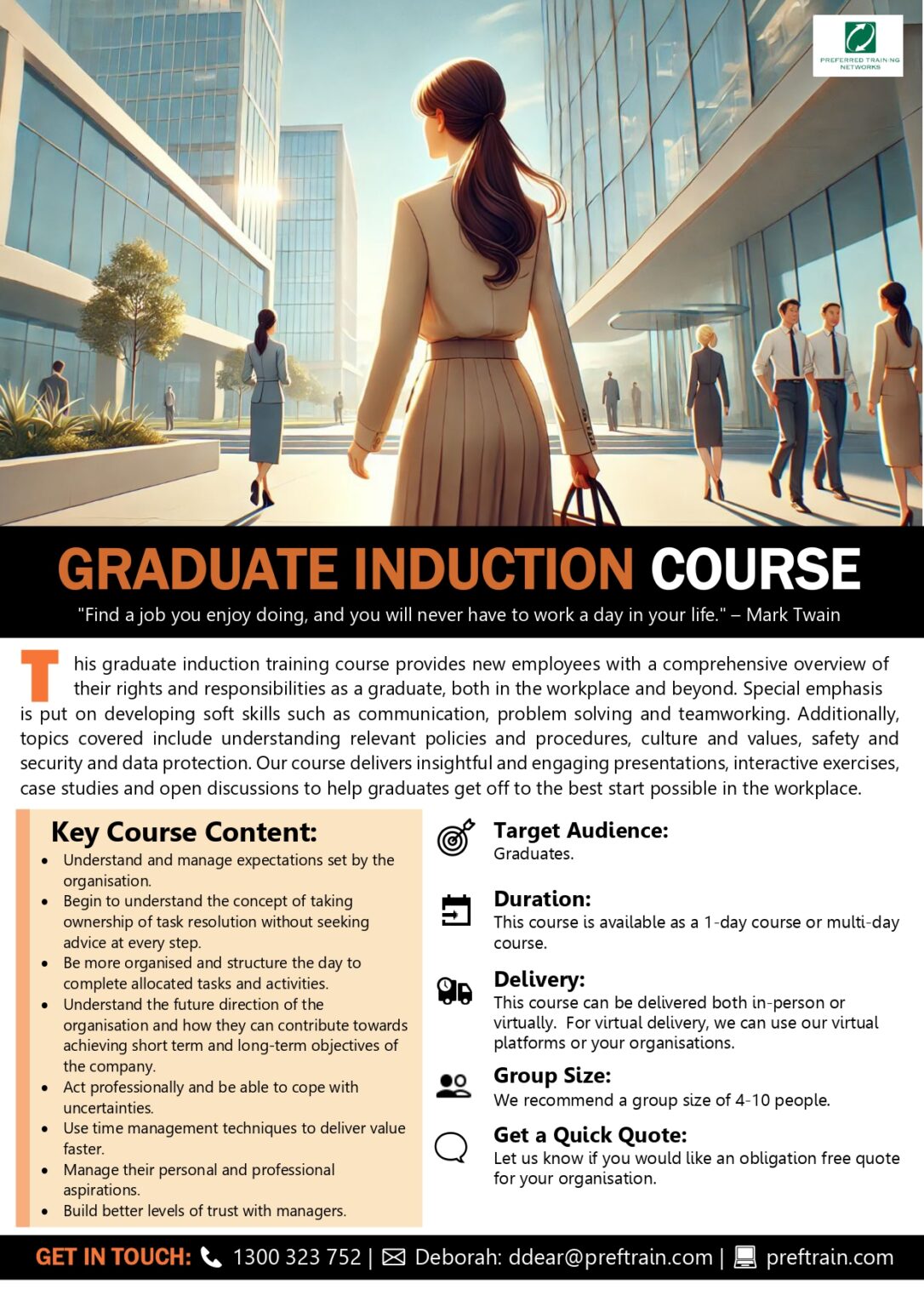
Looking at your current work environment from the eyes of a fresh graduate can be very enlightening. Many graduates believe that the work environment is less structured than at university and is a place where emergencies are occurring in no logical manner.
Graduate induction training courses are highly values by graduates Graduates are almost crying out for training on how to cope with both heavy and light workloads. Graduates need to understand exactly what the organisation expects from them. They need to learn how to be more accountable for their daily tasks in the beginning of their careers. Some graduates have unrealistic expectations of the workload and reporting structure. The course helps reset unrealistic graduate expectations.
Your Graduate Induction skills program is custom designed to give new graduates personal effectiveness and work orientation skills The graduate induction program will provide techniques towards effective time and personal management. It also provides options towards managing expectations and improving the communication skills among the graduates.
For maximum effectiveness, this program is best conducted as an in-house program.
If you would like more information on this training program, please contact: Deborah Dear on 1300 323 752 or email: [email protected] or contact us online today.
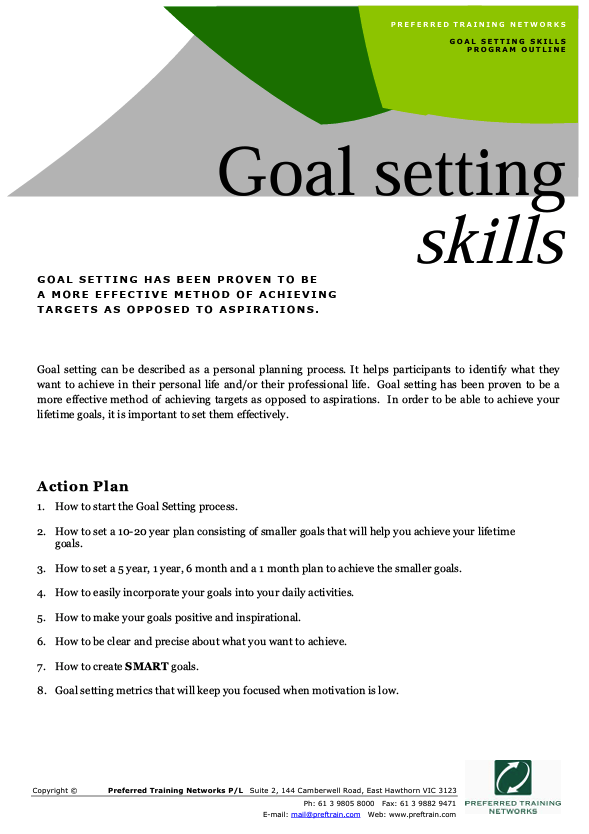
Goal setting can be described as a personal planning process. It helps participants to identify what they want to achieve in their personal life and/or their professional life.
Goal setting can be described as a personal planning process. It helps participants to identify what they want to achieve in their personal life and/or their professional life.
Goal setting has been proven to be a more effective method of achieving targets as opposed to aspirations. In order to be able to achieve your lifetime goals, it is important to set them effectively. If you are looking for a goal-setting workshop to enhance your skills, our course is ideal for you. Participants will learn to develop accurate goal-setting skills for overall development.
For maximum effectiveness, this program is best conducted as an in-house program.
If you would like more information on this training program, please contact: Deborah Dear on 1300 323 752 or email: [email protected] or contact us online today.
Take a look at our highly recommended and popular training programs: Trust Building, Work-Life Balance Training, and Innovation At Work.
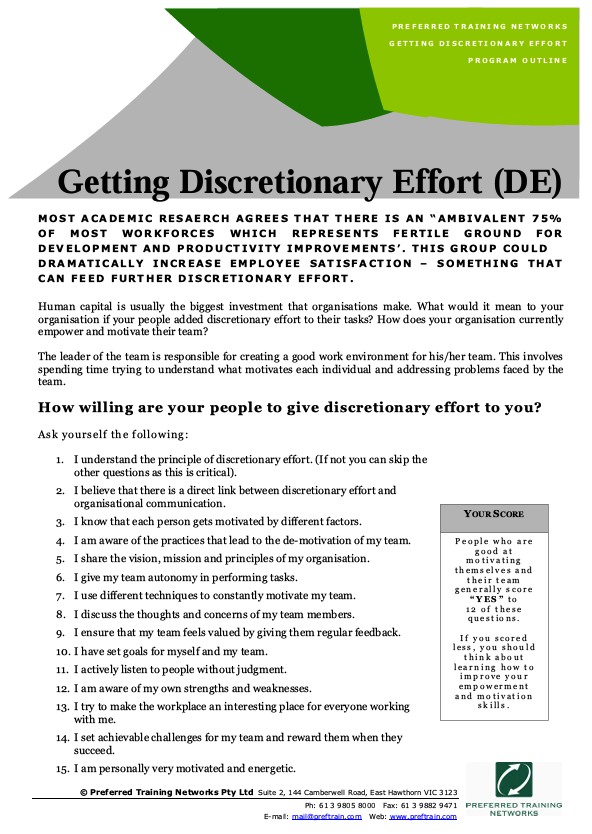
The leader of the team is responsible for creating a good work environment for his/her team. This involves spending time trying to understand what motivates each individual and addressing problems faced by the team.
How willing are your people to give discretionary effort to you?
Ask yourself the following:
For maximum effectiveness, this program is best conducted as an in-house program.
Ideal group size: 4–12 participants
Venue: For your convenience, you can choose to conduct this program at your business premises. Alternatively, we can provide a training venue at a small additional cost.
Duration: Course can be modified to fit inside your timeframe.
Cost: Price on request.
Target Audience: Employees, Supervisors, Team Leaders, Senior Managers or CEOs
If you would like more information on this training program, please contact: Deborah Dear on 1300 323 752 or email: [email protected] or contact us online today.
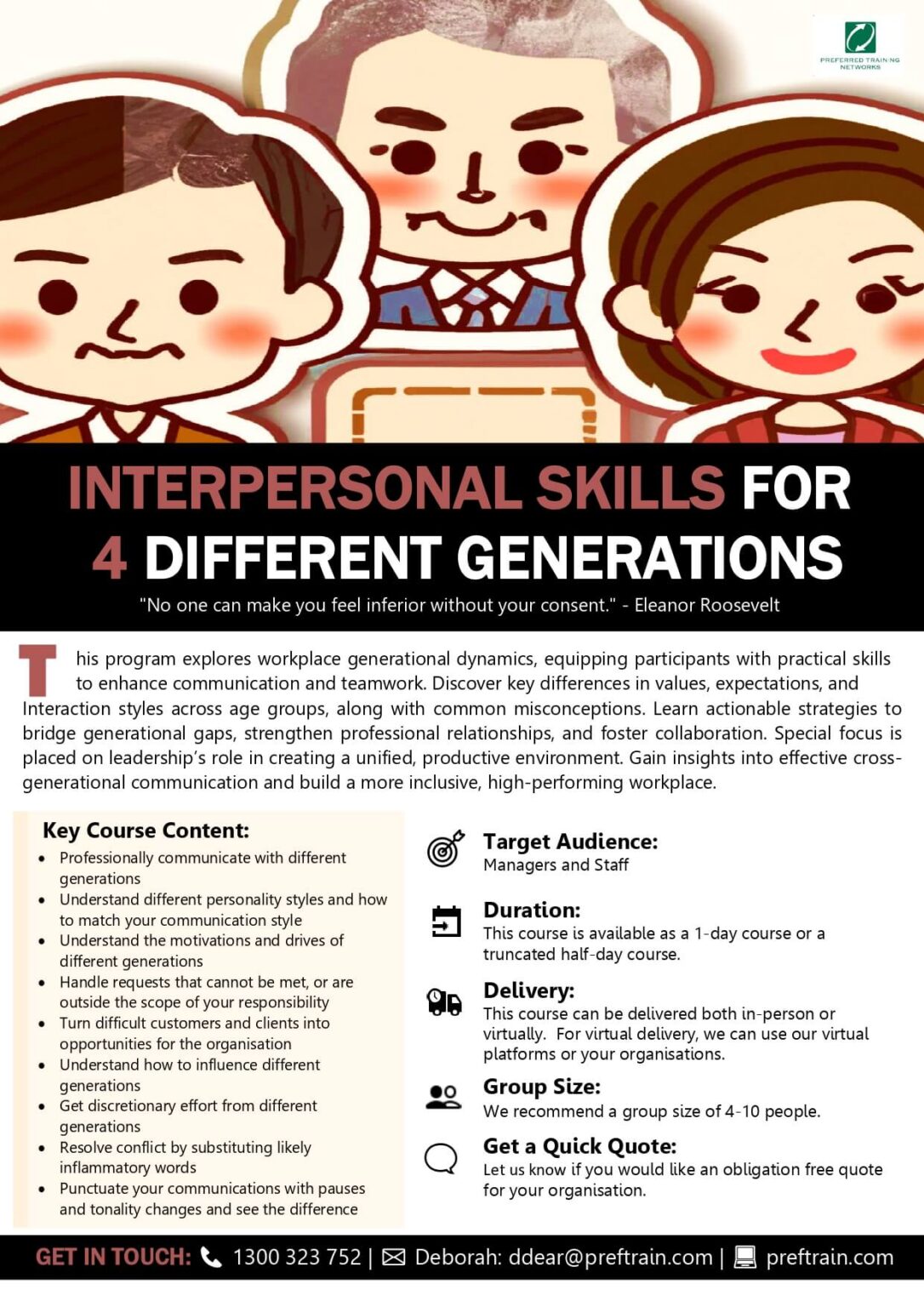
This program explores workplace generational dynamics, equipping participants with practical skills to enhance communication and teamwork. Discover key differences in values, expectations, and interaction styles across age groups, along with common misconceptions. Learn actionable strategies to bridge generational gaps, strengthen professional relationships, and foster collaboration. Special focus is placed on leadership’s role in creating a unified, productive environment. Gain insights into effective cross-generational communication and build a more inclusive, high-performing workplace.
There is abundance of evidence that the number one issue in most workplaces stem from a communication issue. There are now 4 distinct generations in the workplace, and they each have different generational communication styles.
Communication tips for different generations
You simply can’t have a one size fits all communication approach. Different generations will interpret your message differently. If you would like some workplace communication tips, then don’t miss this communication skills program tailor-made for each generation.
Influencing Baby Boomers, Gen X, Gen Y and Gen Z employees
Each generation has a different influencing style. If you are looking for an outcome, make sure you understand generational influencing styles. You may want to influence Gen Y employees to stay, or you may want to influence Baby Boomers to coach Gen X Y & Z employees.
How good are you at communicating with different generations?
Ask yourself the following:
Your Interpersonal Skills for 4 Different Generations program can be custom designed. The program will provide techniques and strategies that will enable different generations in your workplace to effectively handle difficult situations and communicate more openly with their colleagues.
For maximum effectiveness, this program is best conducted as an in-house program.
Ideal group size: 4–12 participants.
Venue: For your convenience, you can choose to conduct this program at your business premises. Alternatively, we can provide a training venue at a small additional cost.
Cost: Price on request.
Target Audience: Employees, Supervisors, Team Leaders, Senior Managers or CEO’s.
If you would like more information on this training program, please contact: Deborah Dear on 1300 323 752 or email: [email protected] or contact us online today.
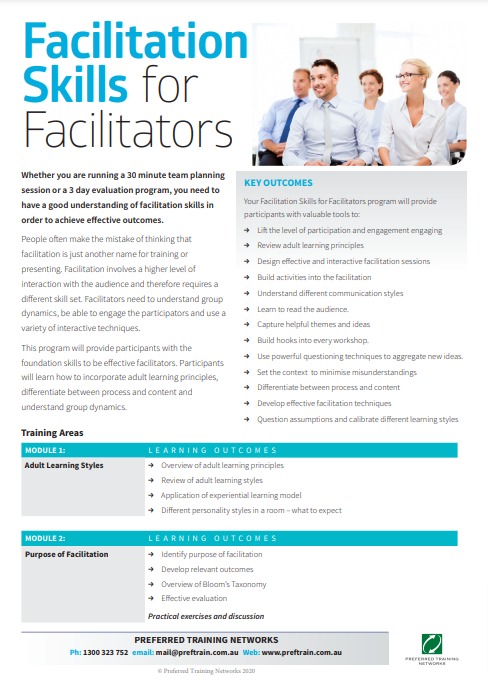
This program will provide participants with the foundation skills to be effective facilitators. Participants will learn how to incorporate adult learning principles, differentiate between process and content and understand group dynamics.
MODULE 1: Adult Learning Styles
MODULE 2: Purpose of Facilitation
MODULE 3: Process and Content
MODULE 4: Questioning and Listening Skills
MODULE 5: Group Dynamics
MODULE 6: Facilitation Techniques
Group Size: An ideal group size is 4– 10 participants.
Venue: For your convenience, you can choose to conduct this facilitation skills program at your offices. Alternatively, we can provide a venue at a small additional cost.
Duration: This course can be tailored to meet your timeframes.
Cost: Upon request.
Target Audience: Trainers, Facilitators and Projects Leads
Complementary and aligned courses include:
If you would like more information on this training program, please contact: Deborah Dear on 1300 323 752 or email: [email protected] or contact us online today.
For maximum effectiveness, this program is best conducted as an in-house program.
If you would like more information on this training program, please contact us at 1300 323 752 or Email: [email protected]
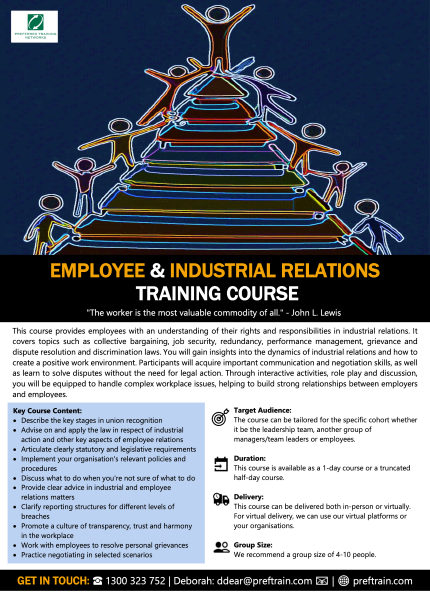
This tailored ‘Employee and Industrial Relations’ training program will provide participants with the confidence to better manage employee relationship issues. Whether it is dealing with a formal behavioural issue or simply talking with staff about pay and conditions, managers need to be correctly informed. Without the correct information, managers run the risk of making poor decisions on the run or shooting from the hip and potentially inflaming the original issue.
For maximum effectiveness, this program is best conducted as an in-house program.
Ideal group size 7–12 participants
Venue: For your convenience, you can choose to conduct this program at your premises. Alternatively, we can provide a training venue at a small additional cost
Duration: This program can be conducted as a one day or half day program
Cost: Price on request.
If you would like more information on this training program, please contact:
Preferred Training Networks on 1300 323 752
Email: Deborah at [email protected]